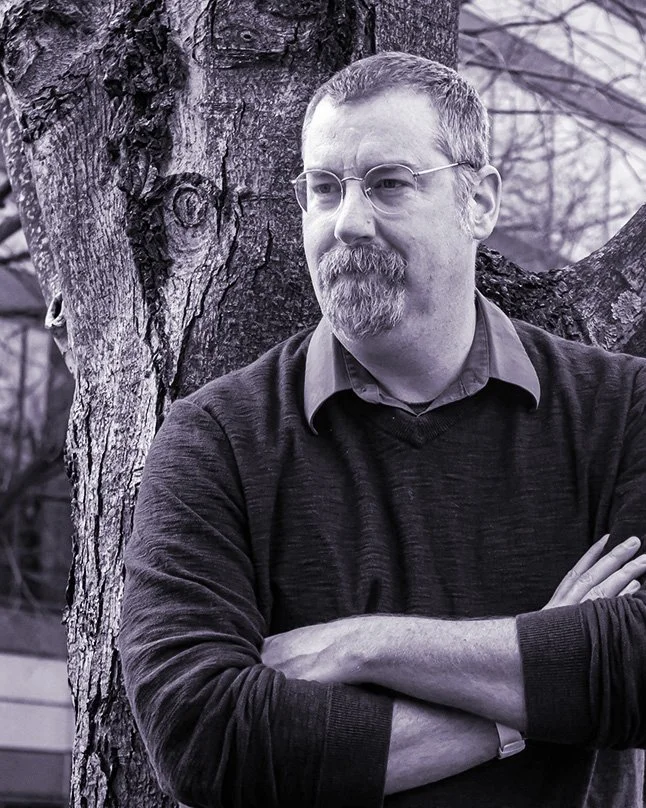
Tim Kulp, writing as T. Kulp
I’m Tim Kulp, the horror author writing as T. Kulp. I write character-driven cosmic, folk, and dark fantasy horror, including Faith & Deed and Lazarus Spiral, connected through the Long Debt universe.
Not the kind that ends when you close the book, but the kind that follows you home because it was always about home to begin with. My work lives in the psychogeography (no, I didn’t make that word up) of ordinary places: the basement stairs, the wet-wood smell under something sweeter, the small town that's had a long, weary history with the dark. I'm interested in what's buried under the familiar, and in the moment ordinary people meet the unknowable and realize it's looking back.
Every book I write is a doorway into a single, interconnected mythos. A sigil in one story is a promise in another. I don't build standalone scares; I build a haunted world, one series at a time, for the readers who choose to live in it with me.
Cosmic dread, human warmth. Slow burn over spectacle. The real horror is rarely in the shadows, it's in whoever's willing to look into them.
The reader who couldn't read
Here's the part people don't expect.
I hated reading as a kid.
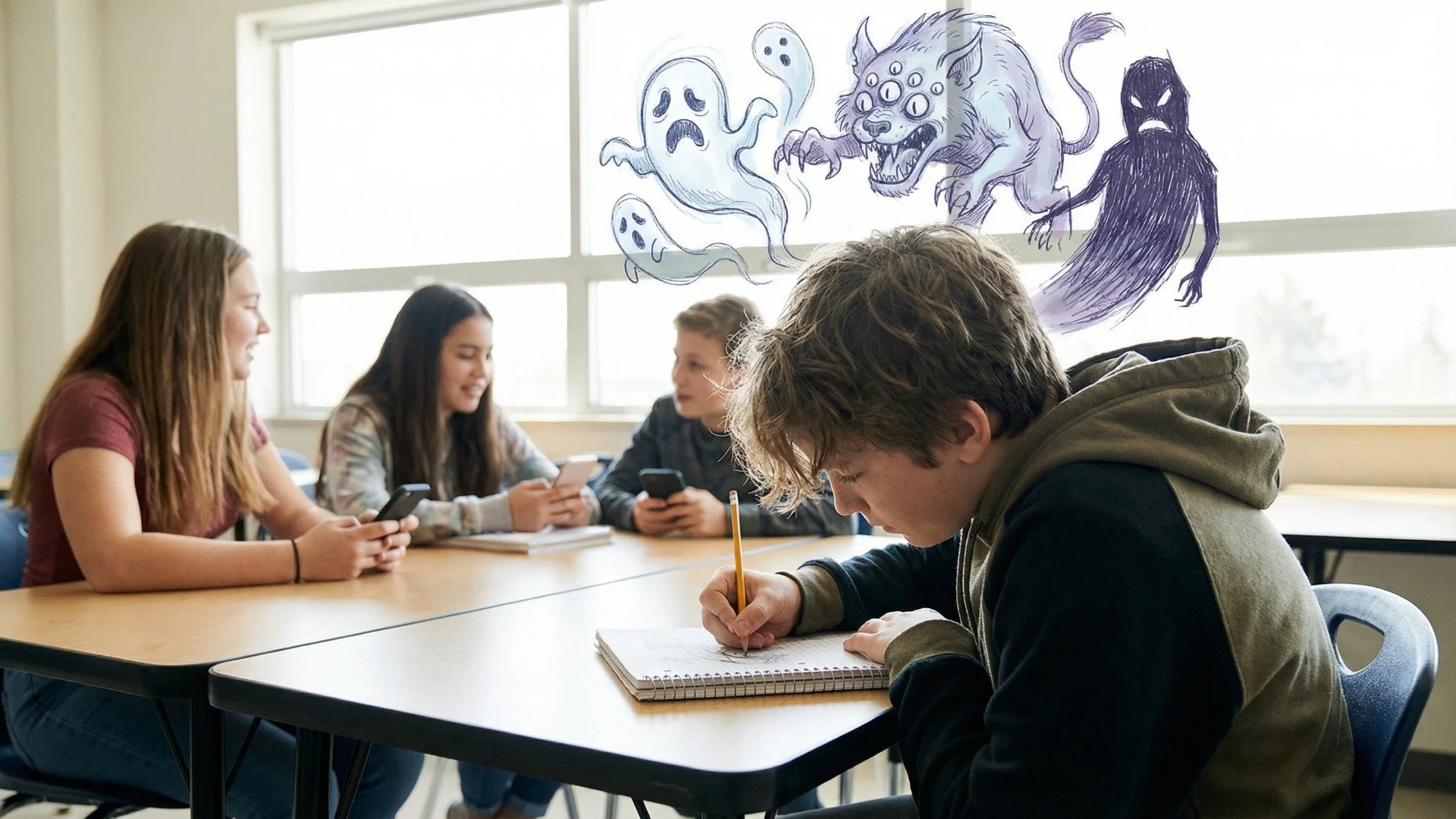
Low comprehension, slow reader, couldn’t focus, couldn’t picture the stories. I'd hold a book open and pretend because I didn’t want people think I couldn’t read but I struggled, hard.
Stephen King books terrified me not because of their content, but because they’re huge and how could someone like me ever read something like that. Don’t even get me started on the nightmare tomes of Brandon Sanderson. These books were a force march for me, when the hike stops being fun, your legs are done, and every step is misery.
Two things saved me.
The first was Dungeons & Dragons. Ravenloft, specifically which was a whole horror world you could build and rebuild and get lost in. That's where I learned worldbuilding. That's where I learned the mechanics of fear: the exact moment at a candlelit table when somebody says, can we turn the lights back on? I wanted to know where that moment lived, and how to build toward it on purpose.
The second was H.P. Lovecraft. The stories were short enough for a kid who struggled but complex enough to feel like I was reading something I didn’t have to feel ashamed of reading. And best of all, they were about the unknowable. About crossing a line you shouldn't cross, reading a book you shouldn't read, and something noticing you that at first feels amazing until you feel the truth. And Lovecraft’s tales connected. A monster here, a cursed city turning up there, dots you could join across a dozen tales. A shared universe.
I didn't read a single Stephen King book until I decided to become a horror writer myself. Figured I probably should. Started with The Gunslinger. And after falling in love with the Dark Tower, I moved on to Pet Semetary, The Shining, and so on.
I still write short. Short chapters, short books, doorways a struggling reader can actually walk through.
Because I am that reader.
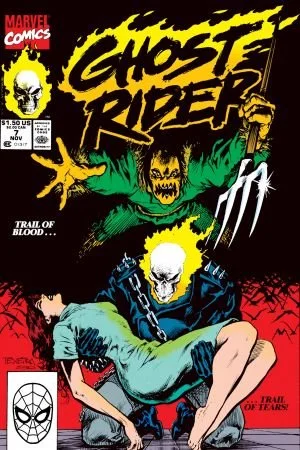
I loved reading comic books like Ghost Rider, Moon Knight, and Wolverine as a kid.
This is Ghost Rider #7, cover by Mark Texeira, written by Howard Mackie.
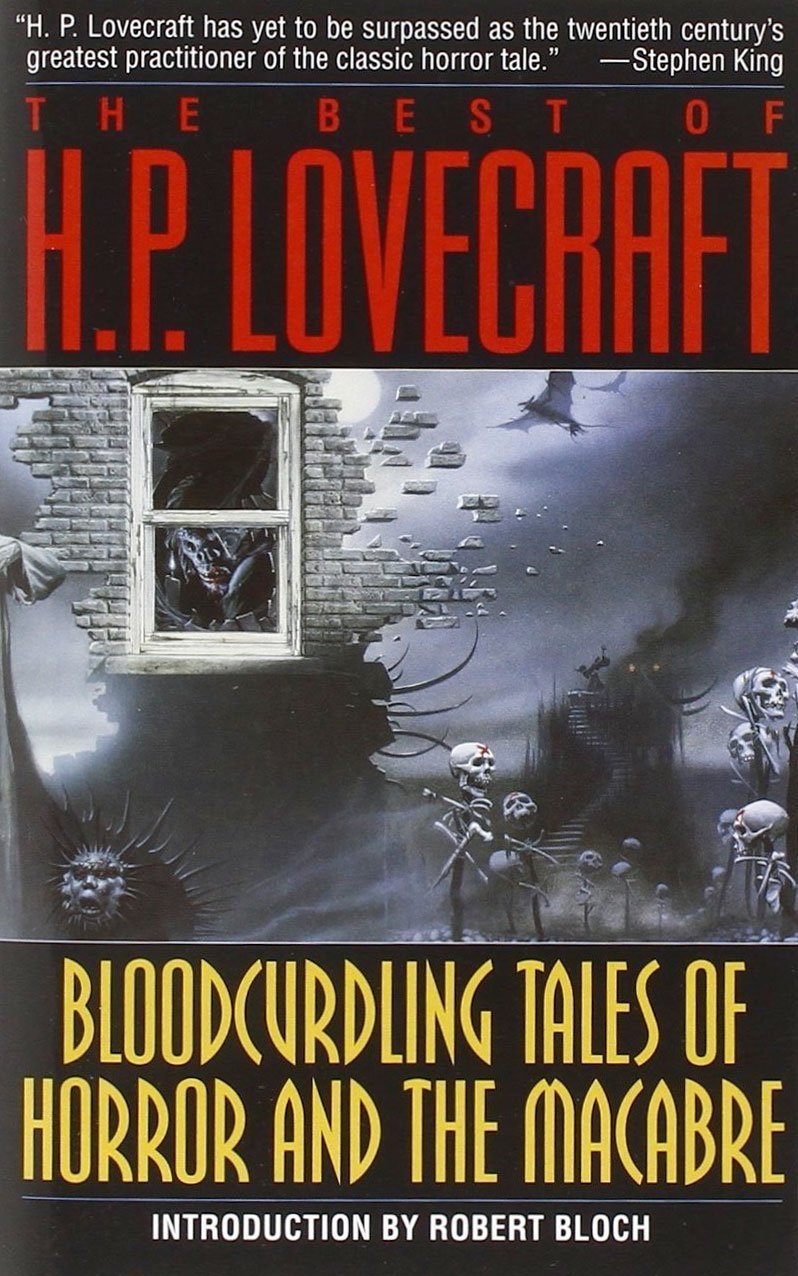
I always looked for books of short stories as a kid. This one’s cover art about blew me away. So I convinced my parents to buy it for me. And thus began my love for the mythos of H.P. Lovecraft.
From Gettysburg to the Void
I grew up in a small town near Gettysburg, PA, the bloodiest battle of the United States Civil War.
And there were so many tales of hauntings that I couldn’t not be a horror writer. But I don’t tell tales of ghosts (usually).
I spin tales of cosmic horror.
Cosmic horror is the dread of being small and unseen in a vast, indifferent world.
A kid feels it wedged in a crevice at Devil's Den, staring down into pure dark, realizing if I fall down there at night, nobody is coming to save me. You feel it lost on a mountain you were sure you knew, as the light goes and the trail quietly stops being there. You feel it on the spinning carnival ride, flung out over the graveyard on one turn, back toward the bright, laughing midway on the next. Happiness and the dark, right beside each other, over and over.
The old dread lived in haunted ground and the woods past the edge of town. The new dread lives in your hand. Alone in bed, scrolling for no reason, holding a device that wakes you just to remind you that you're not enough; everyone else got the vacation, the car, the life, and something you can't see has already decided you don't matter. An indifferent universe that doesn't care whether you live or die, as long as you keep scrolling.
That's cosmic horror. That's the Void. That's the migration I keep writing toward from the battlefield outside my hometown to the glow of the screen in a dark room.